Thinking beyond Materials.
Using Products longer.
The choice of materials, design, and product life span all influence how resources are used in our premium eyewear. That is why we consider the various stages of the product life cycle—from material selection and product development through manufacturing to use and repair.
A New Perspective on Raw Materials
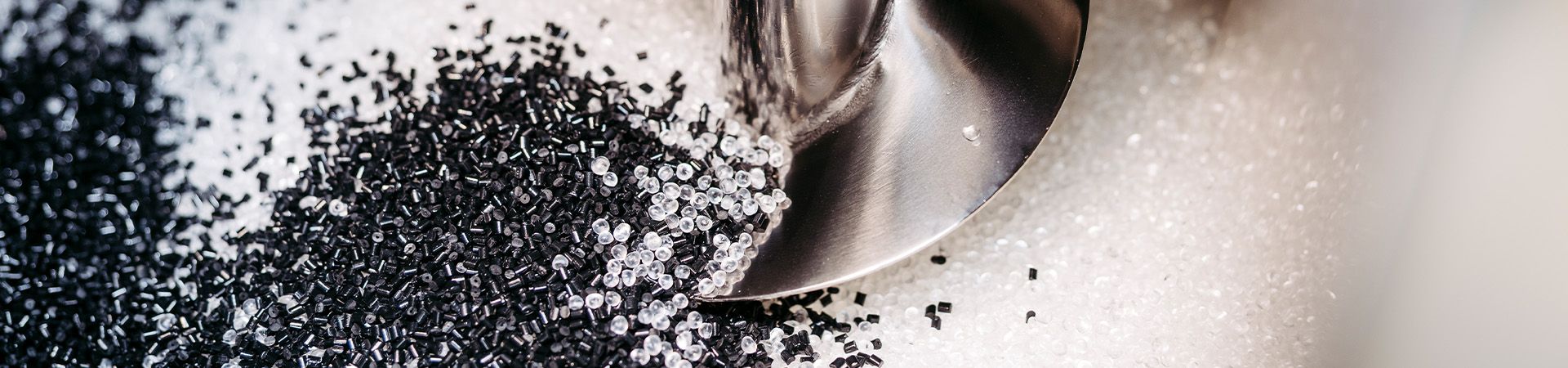
To reduce our use of fossil-based raw materials, we are gradually switching our plastic materials to bio-circular alternatives. In doing so, we must ensure that requirements for quality, functionality, and processability are maintained.
What materials do we use, exactly?
For select components of our synthetic eyewear, we use a certified bio-circular polyamide. The underlying life cycle assessment was conducted in accordance with ISO 14040/44 and ISO 14067 and independently verified. During manufacturing, fossil-based raw materials are completely replaced by bio-based residual materials from the EU.
Where do we use this bio-circular material?
The bio-circular material is used in the synthetic collections of our three brands. Which components are made from it varies depending on the brand, model, and technical requirements for the components. Individual parts of a pair of glasses may still be made from fossil-based plastic or other materials.
0 %
fossil fuels
Fossil-based raw materials are being completely replaced by bio-based byproducts in plastics manufacturing.
100 %
renewable Energy
The bio-circular material is manufactured by the supplier using 100% renewable energy.
60 %
less CO2e
The carbon footprint of the material used is about 60% lower than that of a comparable fossil-based material. 2025: -60% | 2026: -70% *
Explanation of Carbon Footprint: The values refer to the production of the material and not to the finished glasses. For 2026, the life cycle assessment (LCA) considers 1 kg of finished material without packaging, from raw material extraction to the material manufacturer’s factory gate (cradle-to-gate). The LCA was independently verified by TÜV Rheinland in accordance with ISO 14040/44 and ISO 14067.
Thinking About Durability
How long a pair of glasses can be used is determined as early as the design phase. That’s why our premium glasses and their components undergo defined stress tests: Among other things, the temples are repeatedly opened and closed, the frames and lenses are subjected to mechanical stress, and the materials are tested under various temperature conditions. At the same time, we take repairability into account during the design process. Replacement parts are available for approximately 85% of a pair of glasses’ components and can be replaced as needed. (Calculated based on the components of a pair of glasses for which replacement parts are available.)
Use Materials Strategically
In manufacturing, we focus specifically on material consumption. We track material usage and scrap and use this data to further develop our products and production processes. Production equipment, such as tools, is maintained, reused, and modified in our in-house toolmaking department. The current EMAS benchmark for material usage per pair of glasses is approximately 163 grams. Our goal is to keep this figure stable despite changing product requirements. (This figure describes the material input in production per pair of glasses, not the weight of a finished pair of glasses.)
Longer product life
We consider repairability and the availability of replacement parts to be key factors in ensuring the long-term use of our products. If a component is damaged or worn out, it can often be replaced individually without having to replace the entire pair of glasses.
85 %
of the components of a pair of glasses are available as replaceable parts
Calculated based on the components of a pair of glasses for which replacement parts have been provided.
6 years
keeping replacement parts for our eyeglasses in stock
Even if a collection is no longer available, replacement parts for the corresponding eyeglasses can still be ordered for at least six years.
16
established testing procedures for quality and durability
Depending on the model, specific test procedures are used to evaluate materials, components, and designs under various loads.